NetSuite PLM Integration for Fashion & Apparel | StyleChain
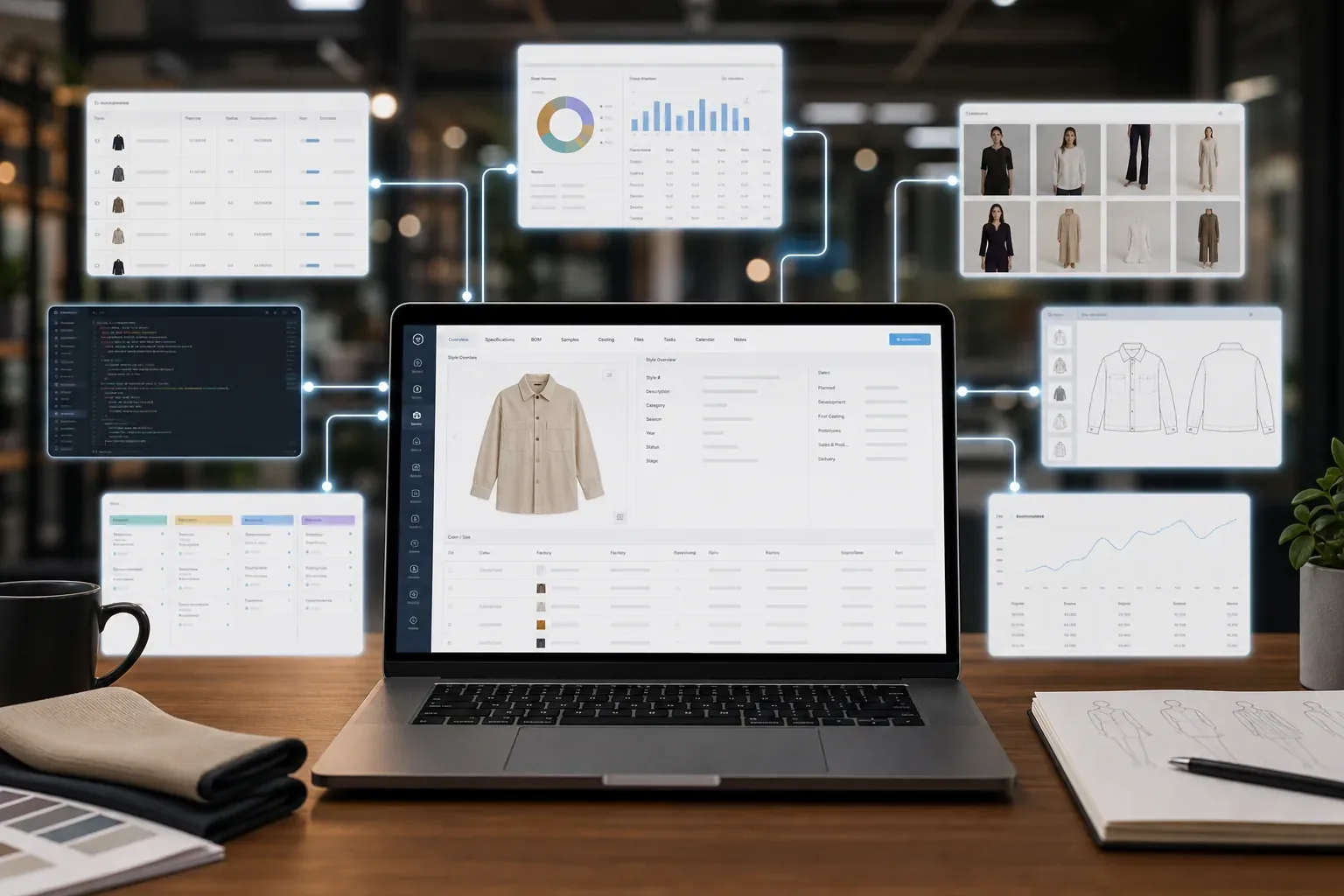
NetSuite excels when item, inventory, and financial records are coherent; fashion excels when creative iteration is fast and SKUs multiply. PLM–NetSuite integration becomes AI-aware when machine learning assists data mapping from development structures to ERP masters, predictive inventory models anticipate allocation stress before ATP breaks, and intelligent consolidation explains margin changes across subsidiaries without manual pivot tables.
StyleChain positions intelligent automation as the adaptive layer between creative product data and ERP rigor: models learn which attribute combinations historically caused duplicate items, which factories drive late receipt variance, and which matrix patterns correlate with fulfillment errors—then route preventive fixes before transactions multiply downstream.
Ecosystem references include Boardriders, Champion, LSKD, Peter Alexander, White Fox, Rockwear, and many more; for AI-differentiated integration outcomes, consider how operators such as M.J. Bale, AXL Co, Taking Shape, Caprice, Johnny Bigg, Love to Dream, and CSB scale complexity with predictive analytics while preserving brand-specific governance.
Scale context remains grounded: 3,500+ suppliers, 30 countries, and 20+ years since 2006, with directional outcomes like ~20% administrative headcount efficiency, ~73% production volume increases, and ~50% fewer claims when automation augments—not bypasses—human accountability.
StyleChain deliberately uses different keywords than ‘proven-only’ messaging: predictive, intelligent, automated, and ML-driven describe systems that continuously learn from seasonal behavior while maintaining audit trails required for public and private company finance.
That philosophical split matters for SEO and for buying committees: teams searching for machine learning, predictive inventory, and intelligent automation should find pages that speak their language—without pretending AI removes accountability. The operational promise is faster detection of integration drift, earlier prevention of ATP failures, and clearer consolidation stories when subsidiaries multiply.
AI-driven data mapping: from PLM structures to NetSuite item truth
Mapping color, size, and prepack permutations into NetSuite matrix items is ideal ML assistance territory. Classifiers trained on prior seasons suggest the correct item hierarchy placement, flag near-duplicate candidates, and estimate confidence scores for master data stewards. Human approval remains mandatory for finance-sensitive attributes, but decision time compresses dramatically. Stability tests each season ensure new launches do not collapse mapping confidence—especially when trims, packaging, or licensing fields expand unexpectedly.
When new categories launch without perfect precedent, transfer learning from adjacent families prevents brittle rule explosions. Intelligent automation should expose ‘why’ a mapping was suggested—feature importance and historical analogues—so disagreements become evidence-based adjustments, not subjective debates.
For intercompany complexity, graph-like reasoning assists by surfacing which item forks will cause consolidation headaches later—prompting consolidation before subsidiaries harden conflicting records.
Natural-language assists can also summarize dense engineering notes into ERP-safe attribute fields, but always with human sign-off: the model proposes; the steward verifies—especially for regulated claims, restricted materials, and childrenswear requirements.
Predictive inventory, ATP intelligence, and automated allocation guidance
ATP failures are customer-facing incidents; predictive models reduce them by forecasting which SKUs will breach availability thresholds during promotional spikes or influencer events, then recommending proactive inventory moves or adjusted promise dates. Automation can draft allocation proposals ranked by margin and strategic account priority, leaving leaders to confirm rather than construct plans from scratch each week.
Receipt timing models learn lane-specific delays and supplier reliability, adjusting internal availability buffers without crude one-size safety stock rules that starve some doors and overstock others.
Return and clearance signals can feed intelligent replenishment suppression—preventing naive systems from reordering SKUs with structurally high return reasons until technical fixes land in PLM.
Marketplace and DTC mix amplifies demand volatility; ensemble models that blend short-horizon web signals with supplier lead-time priors generally outperform single-factor forecasts during promo season. The automation layer should present confidence intervals to planners, not point estimates dressed as certainty.
Intelligent consolidation: financial narratives across subsidiaries
Consolidation is not only accounting—it is operational translation. ML-assisted narratives summarize margin movement by linking PLM change history—BOM shifts, reroutes, duty surprises—to consolidated financial deltas finance leaders must explain on calls. That intelligence compresses close cycles and reduces ambiguous ‘other’ line items that erode trust.
Anomaly detection across subsidiaries highlights unusual transfer pricing patterns, sudden item class shifts, or inventory builds that precede markdown risk—early prompts for merchandising and finance to align on corrective actions.
Explainability packages—top drivers, comparable seasons, and linked PLM tickets—help CFO offices defend results without importing a data science team into every close call. Intelligent consolidation should reduce ‘unknown variance’ buckets, not create a black box executives cannot interrogate.
Wholesale and B2B automation with intelligent guardrails
B2B orders amplify master data errors. Intelligent guardrails validate that order lines reference production-cleared SKUs, compliant packaging, and permissible ship windows—blocking or escalating exceptions rather than allowing silent substitutions that become claims. Policy models adapt to retailer-specific EDI quirks by learning exception resolutions over time, within strict compliance boundaries.
Automated assortment eligibility checks tie PLM readiness scores to order entry, reducing the classic failure mode where sales promises outrun factory reality.
Retailer-specific validation packs—labeling, hangtag sequences, and carton marks—can be generated and checked via intelligent templates, with diffs highlighted when PLM updates a spec after a wholesale order was accepted. That prevents ‘silent’ contract breaches that become chargebacks.
When EDI rejections spike, clustering algorithms identify whether errors concentrate on a single field mapping, a single supplier ship point, or a single retailer schema version—accelerating root-cause fixes without manual log archaeology.
WMS-aware intelligence: warehouse reality meets design intent
Computer vision and barcode telemetry integrations can highlight pick-line mismatches rooted in ambiguous PLM pack definitions—feedback that improves future prepack design rather than punishing warehouse staff for systemic ambiguity. Predictive labor models also help schedule peak processing when launch waves cluster.
When warehouse systems propose dimensional overrides, intelligent reconciliation suggests whether the override reflects an acceptable tolerance or requires a PLM specification correction before the next order wave.
Labor and slotting forecasts can incorporate launch calendars from PLM—so warehouses staff-up before influencer drops and new-store openings, rather than reacting after backlog forms.
Implementation: teach models your fashion reality
Phase zero is data honesty: identify where identifiers are brittle, where subsidiaries diverged historically, and where compliance constraints trump model suggestions. Phase one trains mapping and duplication detection with human labels. Phase two introduces predictive ATP and allocation assistance with simulation environments. Phase three closes loops—model errors become labeled examples, shrinking exception rates each season.
Govern AI like finance reviews capital: confidence thresholds, escalation paths, and periodic model audits are non-negotiable. StyleChain at https://www.stylechain.com helps teams design ML-assisted NetSuite–PLM architectures that remain explainable and governable.
Create a model register: owners, training cadence, approved datasets, and kill switches. When macro shocks invalidate prior seasons, the register forces an explicit decision to retrain, pause, or narrow model scope—rather than silent degradation. Treat the register as a living risk document reviewed with finance quarterly, not a one-time checklist stored in a wiki nobody opens.
FAQ: NetSuite, PLM, and intelligent automation
Will AI create duplicate NetSuite items?
Only if humans override governance. The point of ML mapping is duplicate prevention via similarity detection and confidence-ranked proposals. Posting rules should block creation when confidence is below agreed thresholds.
Can predictive ATP replace ERP inventory records?
Never. Prediction informs decisions; NetSuite remains authoritative for on-hand and transactional state. The model’s job is guidance and early warning, not replacement of ledger truth.
How do we prevent models from amplifying bias across regions?
Segment evaluations by market, monitor allocation fairness metrics, and require human review for changes affecting strategic accounts or protected categories. Responsible automation documents protected attributes and testing protocols.
What signals improve consolidation narratives fastest?
Tightly linked PLM engineering changes, purchase price variances, freight lanes, and promotional calendars. The more causally connected the inputs, the less speculative the narrative.
How should wholesalers adopt intelligent guardrails without slowing sales?
Automate the boring validations instantly—UOM checks, eligibility flags—and route only ambiguous exceptions to humans with pre-built context from PLM. Measured rightly, net cycle time decreases even with extra gates.
Where is the best pilot footprint?
One category with rich matrix complexity and a representative wholesale lane. Expand only after mapping precision, ATP usefulness, and finance narrative quality meet predefined KPIs—not after a ceremonial go-live.
Do we need a separate data lake for ML features?
Not on day one. Start with curated extracts from NetSuite and PLM with stable keys. Add a lake when feature diversity and historical depth justify the operational cost. Premature data lakes often add latency without improving model quality.
How do we test predictions without risking customers?
Shadow mode: run models in parallel, compare recommendations to human decisions, and measure counterfactual outcomes offline before enabling automated actions. Customer-facing ATP adjustments should follow hardening, not curiosity, and should roll out carefully behind feature flags.
What is the biggest misuse of AI in ERP integrations?
Automating postings without confidence controls. The right use is prioritization, anomaly detection, and narrative assistance—then measured autonomy where precision, recall, and auditability meet finance policy.
Intelligent ERP–PLM convergence at scale—across 3,500+ suppliers, 30 countries, and 20+ years of practice since 2006—rewards teams who pair predictive analytics with operational integrity, aiming toward directional outcomes like ~20% administrative efficiency, ~73% production throughput gains, and ~50% fewer supplier claims. Start an AI-forward NetSuite integration assessment with StyleChain at https://www.stylechain.com, and demand explainability, governance, and seasonal test evidence—not just algorithms—in every roadmap milestone.